I recently had the chance to interview Patty Mesich of Isotopia, an isopod breeder working with a wide range of species used in reptile and amphibian setups. As bioactive enclosures continue to grow in popularity, isopods have quietly become one of the most important pieces of the puzzle.
At their core, isopods function as a cleanup crew inside the enclosure. As Patty explains, “Isopods are used as a cleanup crew and as a feeding option. When paired with springtails, both isopods and springtails work together to eat leftovers, mold and poop.”
By breaking down waste, shed skin, and uneaten food, they help maintain the overall health of the soil. While they’re not a complete replacement for maintenance, they make a noticeable difference. “They are not miracle workers,” Patty notes, “but they do make a huge difference in keeping things clean so you do not have to change out your setup as frequently.”
Their role goes beyond just cleanup. In a properly built bioactive system, isopods are part of what keeps the enclosure functioning long-term. “They eat leftovers, reptile sheds, waste and they help the soil,” she says. “They also serve as a food source.” This dual role makes them especially valuable, both as part of the ecosystem and as occasional prey for the animals being kept.
For those just getting started, certain species stand out as reliable and easy to work with. Patty recommends “anything in the Porcellio laevis family such as Dairy Cows or Milk Backs,” along with “Porcellionides pruinosus, Powder Blue or Orange.” These species tend to establish quickly and tolerate a range of conditions.
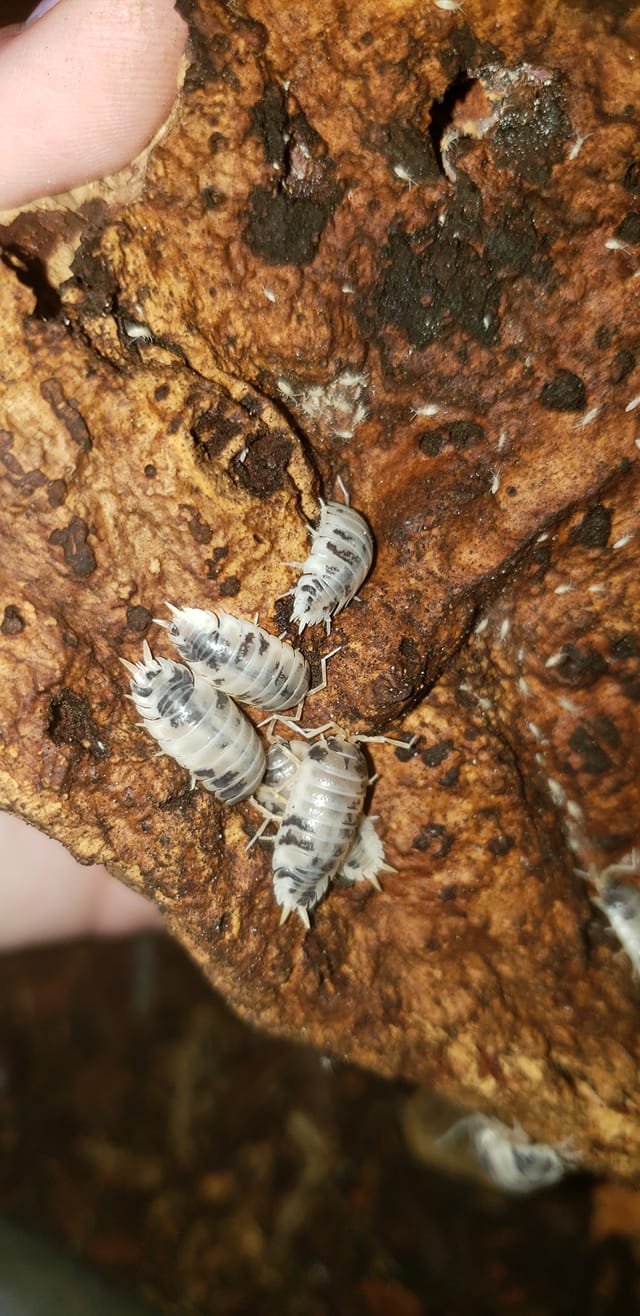
She also points to dwarf species as a strong option, especially Trichorhina tomentosa, commonly known as Dwarf Whites. “They are parthenogenetic, meaning it is a natural form of asexual reproduction. They produce really fast,” she explains, adding that they’re “a fan favorite for gecko and frog keepers.” Their small size and speed also help them avoid being wiped out too quickly in active enclosures.
Like most aspects of reptile keeping, success with isopods comes down to getting the basics right. One of the most common mistakes is not providing enough moisture. “They are crustaceans and need hydration to live,” Patty says. “A damp pile of moss is always recommended… just give it a spray every few days.”
Another overlooked detail is giving them proper cover. “Putting down a piece of bark or wood helps to give them places to hide,” she explains. Without it, many keepers notice their isopods clustering under food dishes or water bowls instead.
While they’re easy to overlook, isopods play a major role in modern herpetoculture. As more keepers move toward naturalistic and bioactive enclosures, understanding how to properly use them can make a real difference in both enclosure health and long-term maintenance.